

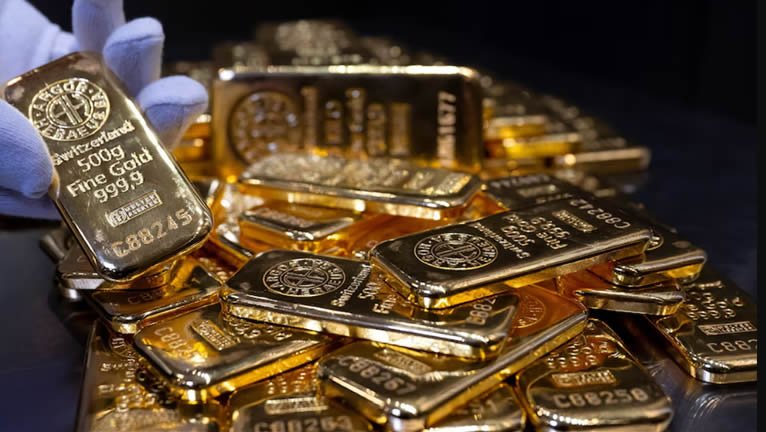
Gold continues to be one of the most closely watched assets in global markets, and its performance throughout 2024 and 2025 has been remarkable. As of November 2025, gold is trading around AUD 6,240–6,314 per troy ounce, placing it firmly near historic highs. The combination of strong institutional demand, shifting economic conditions, and a tightening physical market has created an environment where gold remains a central focus for Australian investors seeking stability and long-term value.
Why Gold Surged Through 2024–2025
One of the most significant drivers of the current gold cycle has been record central-bank buying. Across the world, reserve banks have been increasing their gold holdings as part of long-term strategies to diversify away from major fiat currencies. This level of sovereign accumulation puts a structural floor under prices because it reduces the amount of gold available to the open market.
Investment demand has also played a major role. Gold-backed ETFs have attracted consistent inflows throughout 2025, reflecting renewed appetite for safe-haven assets. When large ETFs absorb physical bullion, they tighten market supply and create conditions that support higher pricing. Even modest ETF inflows can influence global price action when supply growth is slow.
A further catalyst has been the shift in real interest rates. As inflation stabilised and long-term bond yields eased, the opportunity cost of holding gold declined. Gold typically strengthens when real yields fall, as investors rotate away from interest-bearing assets and into hard stores of value. Expectations of future rate cuts have strengthened this trend.
Geopolitical uncertainty has also contributed significantly. Conflicts, rising sovereign debt, weakening currencies, and global trade tensions have all pushed investors toward gold. At the same time, retail demand from India and China has been exceptionally strong, with jewellery purchases and investment bars rising steadily. These two nations consistently dominate global physical demand, reinforcing price support.
Supply Constraints: Why Higher Prices Haven’t Been Solved by More Gold
Gold supply cannot easily increase to meet rising demand. New mining projects take years to plan and develop, and existing mines offer limited flexibility to expand output. Recycling does increase when prices rise, but it still provides only modest additional supply. Because the supply side is so rigid, even moderate increases in demand can trigger substantial price movements, which has been evident across 2024 and 2025.
What Major Analysts Expect for the Years Ahead
Forecasts vary across institutions, but many remain optimistic about gold’s medium-term direction. Some of the most bullish outlooks suggest gold could rise into the AUD 7,000–8,000+ range during 2026 if current macroeconomic trends continue. These scenarios assume a continuation of strong central-bank buying, lower real yields, and robust investor interest.
More balanced forecasts indicate that gold may stabilise in the mid-AUD 5,000s to mid-AUD 6,000s, particularly if global inflation cools and risk appetite improves. Such projections acknowledge strong underlying demand but anticipate fewer extreme catalysts. Even conservative forecasts agree that gold is unlikely to revisit pre-2023 pricing unless major shifts in monetary policy or investment flows occur.
Overall, analysts broadly agree that structural demand, slow supply growth, and ongoing global uncertainty provide a strong foundation for gold prices in Australia.
Scenario Analysis: Where Gold Might Go Next
While no forecast can be guaranteed, using scenario-based models helps outline how gold might behave under different economic conditions.
In the bearish scenario, gold could retreat to around AUD 4,300–5,200 per ounce. This would require persistently high real yields, strong global equity performance, reduced safe-haven demand, and significant ETF outflows. If central banks reduce their purchases and investors rotate into risk assets, gold could face temporary downward pressure.
The baseline scenario places gold between AUD 5,800 and 6,800. This outlook assumes moderate central-bank demand, stable economic conditions, and gradual movements in interest rates. It represents a market supported by strong fundamentals without the need for additional major drivers.
The bullish scenario is based on falling real yields, sustained geopolitical risk, and strong institutional inflows. Under these conditions, gold could rise to AUD 6,800–8,500+, particularly if demand strengthens faster than supply. Sharp ETF inflows or renewed currency instability could push pricing to the upper end of this range.
Indicators Australian Investors Should Monitor
Real interest rates remain one of the most influential indicators for gold’s direction. Lower real yields tend to support stronger pricing. Central-bank announcements are also critical; large purchases or strategic shifts can quickly influence market behaviour. ETF inflow and outflow data provide a clear view of investment trends, and persistent inflows often tighten supply.
Currency movements are another important factor. Gold usually rises when major currencies weaken, as investors seek hedges against fiat volatility. Retail demand from India and China should also be watched closely, as seasonal buying patterns and economic conditions in these regions can significantly impact global physical demand.
Investment Considerations and Strategies
Gold can serve multiple purposes in a diversified portfolio. Many investors use it as a hedge against inflation, geopolitical instability, or currency weakness. Physical bullion is popular among long-term holders who value tangible assets and direct exposure to the metal’s price.
For convenience and liquidity, many Australian investors choose gold ETFs. These instruments allow for fast entry and exit without the need for physical storage. Mining shares offer leveraged exposure to gold movements but come with higher volatility and company-specific risks, which investors should consider carefully.
Managing risk is essential when investing in gold. Strategies such as dollar-cost averaging, setting target price ranges, and defining investment timeframes can help reduce the impact of short-term volatility. Understanding liquidity needs is also important, particularly during periods of rapid price changes.
Downside Risks to the Gold Market
Several factors could pressure gold prices in the short to medium term. Persistently high real yields would make alternative investments more appealing. A strong global equity surge could reduce safe-haven demand. Significant currency strength, especially in major economies, could also weigh on gold. In addition, unexpected central-bank sales or substantial ETF outflows have the potential to soften prices.
Summary: The Outlook for Gold in Australia
The gold market is currently supported by strong structural forces, including central-bank accumulation, steady ETF inflows, and robust demand from Asia. Combined with the slow pace of supply growth, these factors have helped push gold near historic highs in Australia and may keep prices elevated into 2026.
Most forecasts place gold within the AUD 5,800 to 6,800 range under typical market conditions. More optimistic scenarios point toward AUD 7,000–8,500+, while downside risks could bring prices back to AUD 4,300–5,200 if global economic conditions shift. Overall, the long-term outlook for gold remains positive, supported by a combination of structural demand and persistent global uncertainty.
Comments are closed, but trackbacks and pingbacks are open.